Updated
Updated What changed on
Fact-checked Only these facts were re-checked against the 14 October 2026 source checks. Nothing else on the page was re-checked.
- Corrected how ChatGPT search finds pages: it uses OpenAI's own OAI-SearchBot crawl plus partner search providers, including Microsoft's Bing, not Bing alone.
- Corrected which crawler matters: OAI-SearchBot controls whether you appear in ChatGPT search, while GPTBot only controls whether OpenAI trains on your content.
- Added that OpenAI says robots.txt changes for OAI-SearchBot take about 24 hours to apply.
- Added Ahrefs' August to September 2026 sample, which found a web search in only 14.4% of logged-out free ChatGPT responses, beside CXL's 34.5%.
- Updated Cloudflare's AI crawler defaults, including the 15 September 2026 change for new ad-funded domains.
- Corrected the llms.txt advice: no major AI provider says its crawler reads it, and Google says Google Search ignores it.
- Corrected the schema advice: in Ahrefs' May 2026 test, adding JSON-LD gave no citation lift in ChatGPT, and Google stopped showing FAQ rich results on 7 May 2026.
- Updated the OpenAI crawler documentation link to its new address.
Why is my site not showing in ChatGPT? Five silent blockers.
The 30-second answer
Five silent blockers cover almost every case I diagnose. In order of frequency: OAI-SearchBot blocked (usually by accident; GPTBot only controls whether OpenAI trains on your content), weak Bing index coverage, content too buried for a clean quote, no named-author or schema credibility, off-site authority gap. The first two account for half the cases I see and both take 30 seconds to verify with the free bot tester.
 OAI-SearchBot crawls
→
OAI-SearchBot crawls
→
 OpenAI + partner search index
→
ChatGPT cites
OpenAI + partner search index
→
ChatGPT cites
What the citation studies show
of links cited by ChatGPT, Gemini and Copilot appear in Google's top 10 for the same prompt. Perplexity is the outlier at closer to one in three.
How it was measured: 15,000 prompts. This is 2025 data and has not been re-run, so treat it as directional rather than current.
fresher is the content AI assistants cite, compared with the content ranking in organic results.
How it was measured: 16.975 million cited URLs across ChatGPT, Perplexity, Gemini, Copilot, AI Overviews and organic Google. Average age of AI-cited pages was 1,064 days against 1,432 days for organic results. Published July 2025 and last revised April 2026, so it predates the 2026 shift Ahrefs measured in its own citation study.
is the average age of Google's top three AI Overview citations, which is the same as its organic results. The preference for fresh content does not hold for AI Overviews.
How it was measured: Same 17 million citation dataset. This is the counterweight to the headline freshness figure and is usually left out when that figure is quoted.
Before the five blockers: what ChatGPT actually does
ChatGPT answers from two surfaces. One is the training corpus, frozen at the model's cutoff; the other is live search, which uses OpenAI's own OAI-SearchBot crawl plus partner search providers, including Microsoft's Bing. CXL's 2026 analysis put the live-search trigger rate at 34.5% of prompts. Ahrefs' sample of 66.6 million logged-out free ChatGPT responses (August to September 2026) found a web search in only 14.4% of them. CXL also found 88.46% of ChatGPT citations come from pages already in a standard search index. To be eligible for ChatGPT search, a site must allow OAI-SearchBot and OpenAI's published searchbot IP addresses; Bing is one of the partner providers ChatGPT draws on.
The implication: there are two failure modes, not one. Either the model never saw you at training time (slow fix, six to eighteen months) or the live retrieval layer cannot reach or rank you (fast fix, days to weeks). The five blockers below are ordered by which one is most likely to be the actual problem on a typical UK B2B site.
The five silent blockers, ordered by frequency
1OAI-SearchBot blocked by accident
The single most common cause and the easiest to miss. Cloudflare began blocking AI crawlers by default on 1 July 2025. Since 15 September 2026, new ad-funded domains block AI training and agents on ad pages by default while search crawling stays allowed, and choosing Block for AI Training (rather than Disallow AI Training) now also blocks Googlebot and Bingbot. WordPress security plugins (Wordfence, Sucuri) add bot rules quietly after updates. Old robots.txt directives left behind by a privacy-focused agency. A staging robots.txt copied to production. None of these surface in any dashboard you check day-to-day.
Fix: test it. The free AI bot tester on this site checks OpenAI's GPTBot, OAI-SearchBot and ChatGPT-User plus Google-Extended, ClaudeBot and PerplexityBot in one pass. Red rows are unblocked work; do those first.
2Bing index coverage is weak
ChatGPT search uses OpenAI's own crawler plus partner search providers, including Microsoft. Not every search goes through Bing, but Bing is one of the partners. A site can rank page one in Google and still have half its URLs missing from Bing. Common causes: never verified in Bing Webmaster Tools, no Bing sitemap submission, the Bing crawler being deprioritised by a host that throttles unknown bots, or a JavaScript-heavy stack where Bing renders less reliably than Googlebot.
Fix sequence: verify the property in Bing Webmaster Tools, submit the XML sitemap, fix any crawl errors flagged there, plug IndexNow in if you publish more than once a fortnight. Then check coverage URL by URL on the priority pages. Bing is one of ChatGPT's search partners, so this helps on live queries, but it does not replace allowing OAI-SearchBot.
3The answer is buried, not extractable
The page exists, it is crawlable, it ranks. But the answer to the question someone might ask is buried three paragraphs into brand voice. ChatGPT cannot lift a clean quote so it picks a cleaner source. Kyenna's 2026 piece puts it well: a 2,000-word post that ranks on Google can still get zero AI citations because the answers are not in clearly labelled, extractable blocks.
Fix: lead each section with a 20-30 word direct answer in plain prose, then expand. Turn at least one H2 per priority page into a real question ("What does X mean for Y?" not "Our approach to X"). Add 5-8 FAQs at the bottom of pages where the topic naturally invites questions. FAQPage is still valid schema.org markup, but in Ahrefs' May 2026 test adding JSON-LD gave no citation lift in ChatGPT, and Google stopped showing FAQ rich results on 7 May 2026.
4No named-author credibility signal
Anonymous brand voice. No author byline, no real bio, no credentials. When ranking and content depth look similar across competing pages, ChatGPT skews toward sources with a named expert behind them. Schema on its own is not the lever - Ahrefs' May 2026 controlled test found adding JSON-LD gave no citation lift in AI Mode or ChatGPT, and a small decline in AI Overviews. The lever is the named expert; the schema just makes the signal readable.
Fix: name the author at the top of every priority page, write a credible bio that links to LinkedIn and any professional profile, add Person + Article schema referenced by @id from a single shared Person node in your homepage schema. If the author is also the business owner, link the Organization schema's founder to the same @id. Then run the page through the AI Schema Validator to check the author, publisher and sameAs chain.
5Off-site authority gap
Wikipedia entry absent, Wikidata entry absent, Knowledge Graph entity weak, few citations from credible publications. These count less for ChatGPT than for Perplexity (which is explicitly retrieval-heavy) but still tip the tiebreak when two pages look otherwise equivalent. The slowest fix on the list; do it after the four faster ones, not before.
Fix sequence: a verifiable Wikidata entity (start there, it is the lowest bar), a handful of editorially earned mentions on trade press your readers actually recognise, and a clean sameAs property in your Person/Organization schema pointing at every profile that proves you are who you say you are.
The freshness lever almost no one uses
From Typescape's 2026 citation study: pages updated within the last 30 days earned 3.2x more ChatGPT citations than stale pages on the same topic. Set yourself a quarterly review cycle on the ten pages that matter and the lift compounds.
If your evergreen post has not been touched in six months and a competitor updated theirs this quarter, the model now has a reason to prefer theirs. A genuine refresh - new figures, a new example, a clarification of something that has changed in the field - is enough. Editing one paragraph and pushing the dateModified is not enough; the model retrieval layer compares actual content, not just timestamps.
How to check whether ChatGPT is citing you today
Two checks worth doing now before you fix anything:
- Brand check. Open ChatGPT (logged-out, web search on), ask "what does [your company] do" and "who is [your name] in [your field]". If the answer is wrong, vague or attributed to a competitor, the model does not have a clean entity record. That is a training-data and authority problem.
- Category check. Pick three queries a buyer would type ("best X consultant in [city]", "how to fix Y", "is Z worth the money"). Ask ChatGPT with web search on. Note which domains it cites. If the same three competitors keep appearing and you do not, those are the pages to study for content gaps.
- Server log check. Grep for GPTBot, OAI-SearchBot and ChatGPT-User in your access logs. No hits means OpenAI's crawler is not reaching you - usually the Cloudflare or robots.txt issue in blocker 1. Hits but no citations means the crawler can read you but is choosing a different source - blockers 3 to 5.
What is not the problem (despite what people will tell you)
- Buying ChatGPT Plus. Does nothing for visibility in other users' answers. Paying for a plan does not change which sources ChatGPT search can find for other people.
- Stuffing keywords for ChatGPT. The model does not weight keyword density the way 2015 Google did. Clear prose that actually answers the question beats keyword-stuffed prose every time.
- Submitting to OpenAI directly. There is no submission form. The one inclusion requirement OpenAI documents is allowing OAI-SearchBot and its published IP addresses.
- Adding llms.txt and waiting. OpenAI has not confirmed it as a retrieval signal. Publish one as hygiene if you want, but expect zero direct lift on ChatGPT specifically.
- More content volume. Three sharp 1,500-word pages on questions your category asks beat thirty thin pages on broad terms. Citation rate scales with extractability and authority, not URL count.
The order to do the work in
- Run the bot test. If anything is red, fix the access layer first. Half the cases I see end here.
- Verify Bing Webmaster Tools, submit the sitemap, fix flagged crawl errors. Wait a week, re-check coverage.
- Pick the ten pages that matter (homepage, primary service, top blog posts). Rewrite each so the first 50 words answer the page's core question directly. Add 5-8 FAQs where the topic supports them.
- Name the author on every priority page. Add Person schema referenced from the homepage. Link sameAs profiles that prove the person exists outside your domain.
- Refresh those ten pages on a quarterly cycle. Real updates, not just dateModified bumps.
- Off-site: Wikidata entry, three to five editorially earned mentions on trade publications. Slowest payoff, do last.
Primary sources
- OpenAI - OAI-SearchBot, GPTBot, ChatGPT-User and OAI-AdsBot documentation
- Ahrefs - ChatGPT query fan-out study (the 14.4% web-search figure)
- CXL - Why your pages are not surfacing in ChatGPT citations (the 34.5% live-search and 88.46% indexed-content figures)
- Typescape - ChatGPT citations explained (the 3.2x freshness figure)
- Kyenna - Why your website is not showing up in ChatGPT or Perplexity (the buried-answer framing)
- 365i - Why ChatGPT cannot find your website (the knowledge-cutoff angle)
- Bing Webmaster Tools and IndexNow for the retrieval-layer half of the fix
More on the diagnostic.
Can I check if ChatGPT can crawl my site?
Yes. The free AI Bot Robots.txt Tester checks GPTBot, OAI-SearchBot and ChatGPT-User in 30 seconds. Half the cases I see end at this step, with a Cloudflare default or a security plugin block the owner did not know they had.
My site ranks page one in Google but not in ChatGPT. Why?
ChatGPT search uses OpenAI's own OAI-SearchBot crawl plus partner search providers, including Microsoft's Bing, so weak Bing coverage can still cost you live answers. The one inclusion requirement OpenAI documents is allowing OAI-SearchBot and its published IP addresses. Verify the site in Bing Webmaster Tools, submit the Bing sitemap, fix flagged crawl errors. CXL's 2026 analysis found 88.46% of ChatGPT citations come from pages already in a standard search index.
How often does ChatGPT actually search the web?
It depends on the study. CXL's 2026 study put it at 34.5% of prompts; Ahrefs' sample of 66.6 million logged-out free ChatGPT responses (August to September 2026) found a web search in only 14.4% of them. If your topic is covered in training, ChatGPT will not search for your page. The fix is publishing on questions the model did not have a good answer for at training time, then making sure OAI-SearchBot and Bing can both reach your version.
Does paying for ChatGPT Plus help my visibility?
No. Subscriptions do nothing for your visibility in answers other users receive. ChatGPT visibility is determined by retrieval, citation and synthesis behaviour, not by account status.
How quickly can I expect to be picked up by ChatGPT?
Once OAI-SearchBot can crawl the page, it becomes eligible for ChatGPT search answers; OpenAI says robots.txt changes for OAI-SearchBot take about 24 hours to apply. Training-data citations follow model release cycles and take months. The live surface is where the quick wins are.
Should I add a llms.txt to help ChatGPT?
OpenAI has not confirmed llms.txt as a retrieval signal for ChatGPT. No major AI provider says its crawler reads your llms.txt, Google says Google Search ignores it, and 2026 log studies found very few fetches. Expecting it to lift ChatGPT visibility specifically would be optimistic. Do the five fixes above first.
Does updating a page help it get cited?
Typescape's 2026 data found pages updated within 30 days earned 3.2x more ChatGPT citations than stale pages on the same topic. Real updates - new figures, new examples - not just dateModified bumps.
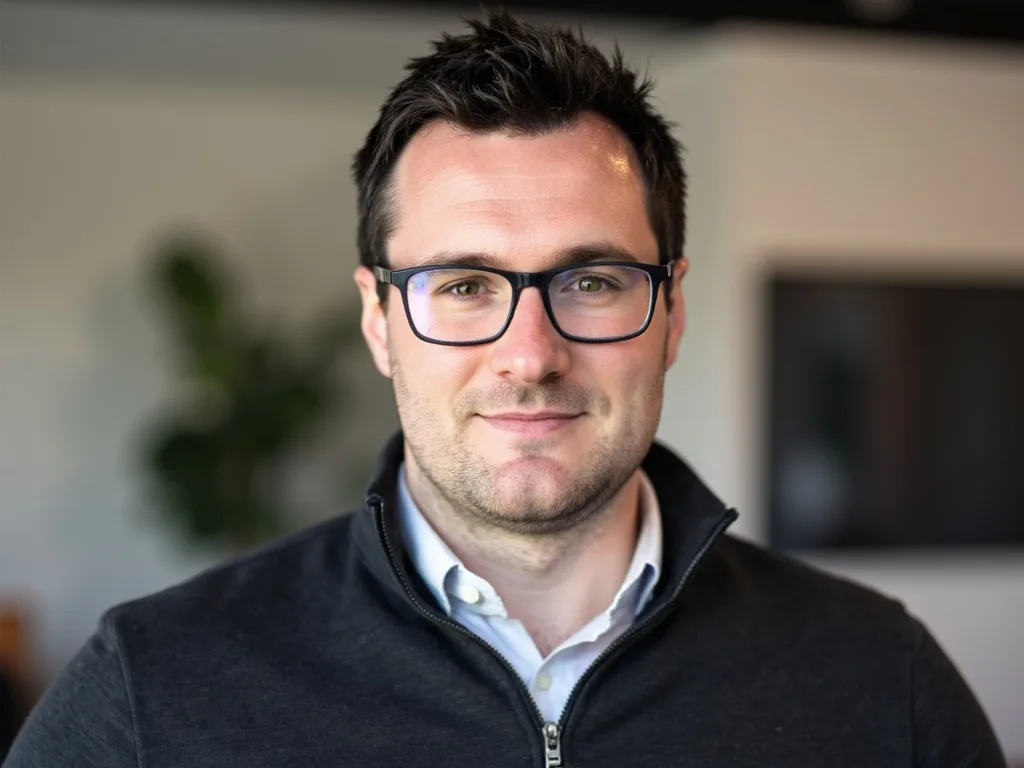
Jason Burns
Independent UK SEO, GEO and AI consultant. In search since 2007. Portfolio includes 3M, BlackRock, Unilever and E.ON. Owner of SEO Moves Ltd since 2014.
More about Jason →Want me to run the full diagnostic?
Send three queries where ChatGPT should be mentioning you. I run them live, log what shows up and which of the five blockers applies. Free check, no follow-up sequence.
Send the queries