Updated
Updated What changed on
Fact-checked Only these facts were re-checked against the 14 October 2026 source checks; nothing else on the page was re-checked.
- Replaced the click-through figures with what Pew, MailOnline, Ahrefs and Seer actually reported, including Seer's partial rebound in early 2026.
- Corrected the Ahrefs schema test: adding JSON-LD gave no citation lift in AI Mode or ChatGPT, and a small decline in AI Overviews.
- Dropped FAQ schema density as the AI Overview lever.
- Split bot access into search crawlers (OAI-SearchBot, Claude-SearchBot, PerplexityBot, Googlebot) and training controls (GPTBot, ClaudeBot, Google-Extended), noting that Google-Extended also controls grounding in the Gemini app.
- Tied ChatGPT to OAI-SearchBot access and kept Bing index health for Copilot.
- Removed the Perplexity recency claim: Ahrefs' data does not show Perplexity favouring fresh content more than other assistants.
- Corrected the Reddit point: Reddit was the most-mentioned domain in ChatGPT answers in Ahrefs' September 2026 US data, not a rare citation.
- Described what the free visibility tool does: it scores structural readiness and gives you test queries to run yourself.
- Corrected the GEO paper's affiliations and added Google's May 2026 guide to optimising for generative AI features.
How to do GEO, in the right order.
The 30-second answer
Five stages, sequenced. Baseline first (measure where you are). Then foundations (schema, bot access, named author, depth). Then citation surface (engine-specific tactics). Then measurement (weekly or fortnightly tracking). Then iteration (quarterly refresh based on data). Skipping the baseline is the most common mistake - teams jump to fixes without knowing which engine has the actual gap.
Evidence behind the steps
of URLs cited in Google AI Overviews appeared in the first 10 results blocks for that query. Ahrefs counts blocks, not organic results, so this is not the same as ranking in the top 10.
How it was measured: 863,000 keyword SERPs and 4 million AI Overview URLs. Ahrefs measures the top 10 as blocks, counting ads, featured snippets and video packs as separate blocks.
was Ahrefs' July 2025 figure. It counted only the top 3 citations per AI Overview, and Ahrefs has since changed its parsing, so the two years are not like for like.
How it was measured: 1.9 million citations from 1 million AI Overviews, analysing only the top 3 most visible citations in each one. Ahrefs notes it improved its parsing between this study and the 2026 update. Both differences mean the fall to 37.9% cannot be read as a like for like change.
fresher is the content AI assistants cite, compared with the content ranking in organic results.
How it was measured: 16.975 million cited URLs across ChatGPT, Perplexity, Gemini, Copilot, AI Overviews and organic Google. Average age of AI-cited pages was 1,064 days against 1,432 days for organic results. Published July 2025 and last revised April 2026, so it predates the 2026 shift Ahrefs measured in its own citation study.
is the average age of Google's top three AI Overview citations, which is the same as its organic results. The preference for fresh content does not hold for AI Overviews.
How it was measured: Same 17 million citation dataset. This is the counterweight to the headline freshness figure and is usually left out when that figure is quoted.
Why GEO matters now
AI search query share crossed a threshold in 2026. Standalone AI engines (ChatGPT, Perplexity, Claude, Gemini, Copilot) plus Google AI Overviews and AI Mode now intercept a meaningful slice of buyer research that previously hit traditional Google results. Pew Research found users clicked a result in 8% of visits with an AI summary against 15% without. MailOnline reported CTR 56.1% lower on desktop and 48.2% lower on mobile. Ahrefs found an AI Overview correlates with a 58% lower click-through rate for the top-ranking page (December 2025 data). Seer measured a 61% fall in organic CTR on AI Overview queries to September 2025, then a partial rebound in January and February 2026. Brands either get cited inside the AI answer or get cut out of the consideration set entirely. That is the practical case for running GEO as a discipline, not a side project. The five stages below sit inside the longer GEO field guide if you want the wider context first.
Stage 1: Baseline
Run your brand and three to five named competitors through each major AI engine on the 10-20 buyer queries that matter. Capture what shows up. The free AI Search Visibility tool scores structural readiness and gives you test queries to run in ChatGPT, Perplexity and Google AI Mode yourself; use a paid tracker (Profound, AIClicks, Otterly) for ongoing monitoring. The baseline tells you which engine is the actual gap (often it is not the one you assumed) and which queries are open vs locked. Skipping this stage is the single most common mistake - teams jump to fixes without knowing where the gap actually sits.
Output of this stage: a citation matrix - rows are priority queries, columns are engines (ChatGPT, AI Overviews, Perplexity, Claude minimum), cells show present/absent and the cited domains. This becomes the reference document the rest of the programme works from.
Stage 2: Foundations (the SEO-overlap layer)
Bot access verified for the search crawlers (OAI-SearchBot, Claude-SearchBot, PerplexityBot, Googlebot), with GPTBot, ClaudeBot and Google-Extended set as deliberate training choices. Google-Extended also controls grounding in the Gemini app, so blocking it also affects Gemini app answers. Schema chain in place - Article, Person, Organization, FAQPage where the page answers explicit questions. Named author on every content piece with proper credentials. Content depth on priority topics (1,500-2,500 words on the queries that matter). This stage is recognisable as SEO; it is the work that AI engines and Google both reward.
Time cost: 30-90 days depending on existing SEO maturity. If foundations are weak, this is where most of the early budget goes. If foundations are strong, skip to Stage 3 and inherit the wins.
Stage 3: Citation surface (engine-specific)
This is where you target the gap the baseline revealed. OAI-SearchBot access for ChatGPT, and Bing index health for Copilot. PerplexityBot access for Perplexity; Ahrefs' data does not show Perplexity favouring fresh content more than other assistants, and its in-text citations averaged 1,166 days old. Knowledge Graph and YouTube transcripts for Gemini. Ranking and content quality for AI Overviews, not more schema (see the Ahrefs test below). Reddit presence where your audience lives (Reddit was the most-mentioned domain in ChatGPT answers in Ahrefs' September 2026 US data, at 16.8%). Do not do every engine - prioritise based on which one your buyers actually use.
Important: per Ahrefs' May 2026 test on 1,885 pages, adding JSON-LD gave no citation lift in AI Mode or ChatGPT, and a small decline in AI Overviews - it is hygiene rather than a standalone lever. The ranking position and the named-author signal do most of the work. Do not get stuck adding more schema thinking it will fix a content-depth problem.
 ChatGPT
 Perplexity
 Claude
 Gemini
 AI Overviews
 Copilot
Primary sources for the GEO stack: GEO paper by Princeton, IIT Delhi and other researchers (Aggarwal et al., 2023, KDD 2024), Google's guide to optimising for generative AI features (May 2026, updated July 2026), Search Engine Land's AI crawler optimisation guide, Profound (citation tracking).
Stage 4: Measurement
Weekly or fortnightly sampling against your priority queries. Track three metrics: citation frequency (how often you appear), citation share-of-voice (your appearances vs named competitors), and query coverage (how many of your priority queries cite you at all). Daily creates noise because AI outputs vary per session. Monthly is too slow if you are actively running work.
What to ignore: raw retrieval signals (your page appears in the model's context but is never named), branded queries (vanity, no signal about category authority), and traffic numbers from GA4 alone (AI engines often cite without a click - your brand mention is the win, not the visit).
Stage 5: Iteration
Quarterly content refresh based on the measurement data. Identify queries where you appear and queries where you do not. Where the gap is content-shaped (a competitor with more depth gets cited), add depth. Where the gap is extraction-shaped (your content is there but ChatGPT picks a cleaner source), restructure for extraction. Where the gap is authority-shaped, work the citation pool slowly (Wikipedia entry, Reddit presence, trade publication mentions - none of these compound in a month).
How to spot a GEO programme that is failing
Three patterns I see repeatedly:
- Six weeks of work then silence. GEO is an ongoing discipline. Burst-then-quiet does not build citation density. If the programme has a "campaign" shape, it is not actually GEO.
- "We added schema everywhere." Schema as the headline action means the consultant did not run a baseline. There was no diagnostic - just hygiene work badged as strategy.
- No named-author work on the agency's own site. If they have not done Person schema + credible bios + sustained Reddit presence on their own brand, they cannot do it on yours. Check before you sign.
Common mistakes
- Skipping the baseline. Teams optimise for ChatGPT when the gap is actually in AI Overviews. Wasted budget.
- Doing every engine. Spread thin across six engines, deep on none. Pick the two or three that match your buyer.
- Treating GEO as a campaign. It is an ongoing discipline. Six weeks of work followed by silence does not build citation density.
- Confusing retrieval with citation. ChatGPT pulls in pages it never cites: in Ahrefs' April 2026 study, 67.8% of the URLs it retrieved but did not cite were from Reddit. Yet Reddit was also the most-mentioned domain in ChatGPT answers in Ahrefs' September 2026 US data, at 16.8%. Track citation, not retrieval-adjacent metrics.
- Outsourcing community presence. Reddit accounts that look fake get downranked. The named expert on your team has to do the posting.
More on the playbook.
How long does it take to see results from GEO?
Technical foundations (bot access, schema) show within days. Content depth and citation surface work take three to six months. Community presence work takes six to twelve months to build citation density.
Can I do GEO in-house?
Yes if you already have senior SEO capability in-house. The technical and content work is recognisable as SEO. The new bits (citation tracking, AI bot access, Reddit presence) are learnable in a quarter for an experienced SEO. The diagnostic discipline is harder to learn from scratch.
What is the order of operations for GEO?
Baseline first - know where you are. Then foundations (the SEO-overlap layer). Then citation surface (engine-specific). Then measurement. Then quarterly iteration. Skipping the baseline is the most common mistake - teams jump to fixes without knowing which engine is the actual gap.
Do I need to do GEO on every page?
No. Identify the 10-20 priority queries your buyers ask AI engines and concentrate the work on the pages that answer those queries. Sitewide schema and bot access work covers the rest at low cost.
Which engines should I prioritise?
Audience-dependent. Most UK B2B: AI Overviews and ChatGPT first. SaaS founders: add Perplexity (technical audience). Enterprise selling into M365 shops: add Copilot. Consumer brands with X presence: Grok matters. Run the baseline first, then prioritise based on what your buyers actually use.
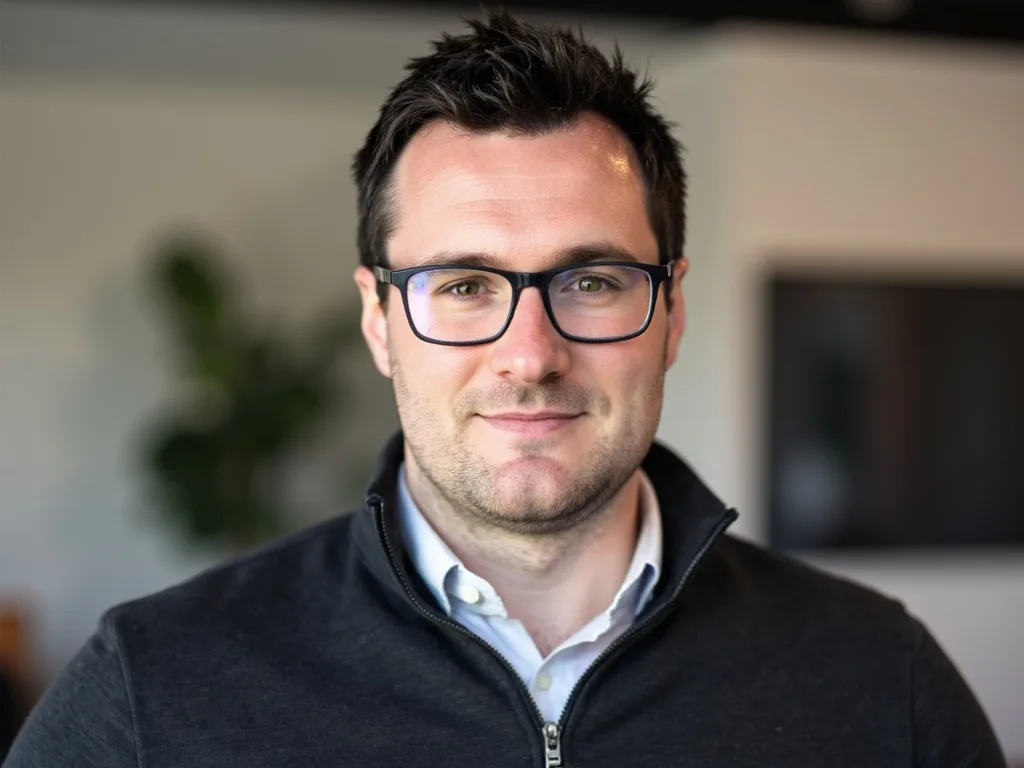
Jason Burns
Independent UK SEO, GEO and AI consultant. In search since 2007. Portfolio includes 3M, BlackRock, Unilever and E.ON. Owner of SEO Moves Ltd since 2014.
More about Jason →Want me to run the baseline for you?
Send three buyer queries and three competitor names. I run them across four AI engines, send the baseline data back, then we talk if the gap is worth working on.
Request the baseline