Updated
Updated What changed on
Fact-checked The Google, OpenAI, Bing, HubSpot, research and term-origin facts on this page were re-checked at the source on 14 October 2026, each confirmed two ways; the audience advice and the 70/30 budget split are my own judgement, not re-checked facts.
- Added Google's May 2026 guide to its AI features, which calls this work "still SEO" and lists AEO and GEO tactics to ignore for Google Search.
- Rewrote the FAQ schema advice: Google stopped showing FAQ rich results on 7 May 2026 and says no special markup is needed for its AI features.
- Fixed the crawler advice: ChatGPT search depends on OAI-SearchBot, not GPTBot, and Google-Extended does not control AI Overviews.
- Replaced the 2025 click-rate trio with dated Pew, Ahrefs and Seer figures, including Seer's partial rebound in early 2026.
- Added the free Search Console and Bing Webmaster Tools AI reports, HubSpot's AI Search Grader, and AI Mode as an answer surface.
- Corrected the term origins: AEO was in use by February 2018 and LLMO by October 2023.
- HubSpot's grader is called AI Search Grader again, at hubspot.com/ai-search-grader; added its $50 a month paid version.
What is answer engine optimisation? Honest definition.
The 30-second answer
Answer engine optimisation (AEO, spelt answer engine optimization in the US) is the practice of getting your content named and cited inside AI-generated answers - from ChatGPT, Perplexity, Claude, Gemini, Copilot, Google AI Overviews and AI Mode. In 2026 it is functionally interchangeable with GEO and LLMO. The term was in use by early 2018 for voice search (Alexa, Siri) and expanded to cover AI chatbot citations. Google's own guide to its AI features calls this work "still SEO". Same discipline as GEO; the choice of acronym is mostly about audience.
 ChatGPT
 Perplexity
 Claude
 Gemini
 AI Overviews
AI Mode
AI Overviews
AI Mode
 Copilot
What the measurements actually show
of URLs cited in Google AI Overviews appeared in the first 10 results blocks for that query. Ahrefs counts blocks, not organic results, so this is not the same as ranking in the top 10.
How it was measured: 863,000 keyword SERPs and 4 million AI Overview URLs. Ahrefs measures the top 10 as blocks, counting ads, featured snippets and video packs as separate blocks.
was Ahrefs' July 2025 figure. It counted only the top 3 citations per AI Overview, and Ahrefs has since changed its parsing, so the two years are not like for like.
How it was measured: 1.9 million citations from 1 million AI Overviews, analysing only the top 3 most visible citations in each one. Ahrefs notes it improved its parsing between this study and the 2026 update. Both differences mean the fall to 37.9% cannot be read as a like for like change.
is how often people clicked a search result when an AI summary was present, against when it was not. Roughly half the click rate.
How it was measured: Browsing data from 900 US adults who agreed to share their activity, covering March 2025. US only, one month, and now over a year old. It remains the largest published real-user measurement rather than a keyword-panel estimate.
of visits to a page carrying an AI summary resulted in a click on a source cited inside that summary.
How it was measured: Same 900-person US panel, March 2025. This is the figure that matters most for anyone selling AI citation as a traffic channel.
AEO, GEO, LLMO - which is which
The acronym soup confuses everyone. Here is the practical sorting:
| Term | Origin | Audience that uses it |
|---|---|---|
| AEO | Voice search era (in use by February 2018), expanded for AI chatbots | Traditional SEO leaders, agencies, marketing teams from a search background |
| GEO | November 2023 academic paper by Princeton and IIT Delhi researchers, accepted to KDD 2024 | Younger marketing leaders, SaaS founders, AI-literate teams |
| LLMO | Practitioner term, in use by October 2023 | Developer-led teams, technical marketing, devrel |
In delivery the work overlaps almost entirely. The same schema work, the same content depth work, the same named-author work. Pick whichever term your audience recognises.
Google now takes the same line for its own search. Its guide to optimising for its AI features, published in May 2026 and last updated on 10 July 2026, names AEO and GEO and says optimising for generative AI search "is optimizing for the search experience, and thus still SEO". It also lists so-called hacks to ignore for Google Search: llms.txt files, chunking content, rewriting content just for AI, seeking inauthentic mentions and overfocusing on structured data. That covers Google only. ChatGPT, Perplexity and Claude run their own systems.
What AEO involves
- FAQ schema. AEO traditionally leaned heavily on FAQPage schema, a habit from the voice-search era. Google stopped showing FAQ rich results on 7 May 2026, and its AI guide says there is no special schema.org markup you need for its AI features. Write the questions and answers as visible text first; I no longer treat the markup as a citation lever.
- Direct-answer paragraphs. One-sentence or two-sentence answers at the top of each section. The shape voice assistants and AI engines pull cleanly.
- Question-led page architecture. Pages structured around the questions buyers actually ask, with each question answered explicitly.
- Conversational query forms. Targeting "how do I", "what is the best", "why does my", "should I" - the queries voice and AI users actually phrase.
- Schema for products, services, organisations. The structural credibility layer.
How AEO and GEO differ in practice
Not much. The honest list of differences in 2026:
- AEO practitioners emphasise FAQ schema and conversational query forms more (legacy of voice search).
- GEO practitioners emphasise citation tracking and Reddit/community presence more (legacy of the academic paper and the SaaS adoption).
- AEO often skips the AI bot access work that GEO foregrounds. The crawler that matters for ChatGPT search is OAI-SearchBot: OpenAI says sites that opt out of it will not be shown in ChatGPT search answers, though they can still appear as navigational links. GPTBot is the crawler for model training, and each setting is separate.
If you are buying a service, ignore the acronym and ask what the deliverable actually includes. The acronym is a tell, not a contract.
AEO vs SEO: when each one applies
SEO targets the ranked list of blue links Google has served for 25 years. AEO targets the direct answer Google AI Overviews, AI Mode, ChatGPT, Perplexity and Claude now serve above (or instead of) those blue links. By Google's own count, AI Overviews has over 2.5 billion monthly active users and AI Mode more than one billion monthly users. Two surfaces, two scoring weights, mostly overlapping work.
- Where SEO is still primary: commercial-intent queries (buying a product, comparing vendors, finding a service near you). Click still happens. Rank still matters. In Seer Interactive's April 2026 study of 53 brands, AI Overviews showed on 8% of commercial and 5% of transactional queries, against 36% of informational ones.
- Where AEO is now primary: definitional queries ("what is X"), how-to queries ("how do I X"), comparison framing queries ("X vs Y") - all of which get a direct AI answer above the SERP. In the same Seer sample, comparison queries triggered an AI Overview 95.4% of the time and question-style queries 85.9%. Clicks fell hard wherever AI summaries showed: Pew found people clicked a result on 8% of visits with an AI summary against 15% without (March 2025, 900 US adults), and Ahrefs measured a 58% lower click rate for the top-ranking page when an AI Overview shows (December 2025 data, 300,000 keywords). Seer then saw organic click-through on AI Overview queries partly rebound, from 1.3% in December 2025 to 2.4% in February 2026, still below the 3.8% on queries without an AI Overview.
- Where both apply equally: branded queries, navigational queries, transactional product pages. The click and the citation are both available.
For most UK B2B brands in 2026 the right move is to budget AEO and SEO as one programme. My rough rule of thumb is about 70% shared work and 30% AEO-specific. Splitting them between two consultants double-pays for one job.
How to measure AEO success
SEO measures rank position and organic click. AEO measures three different things:
- Citation frequency. How often your brand appears as a named source inside AI engine answers on your priority queries. Sample weekly with a tool (Profound, AIClicks, Otterly) or manually through ChatGPT/Perplexity browser windows.
- Citation share-of-voice. Your appearances as a percentage of total citations against named competitors on the same queries. Useful for board reporting.
- Query coverage. How many of your priority queries cite you at all (binary present/absent across the priority list).
Two free first-party reports now sit alongside those tools. Google Search Console has a Generative AI performance report showing impressions, which pages appear in AI responses and in which countries; it reached all websites worldwide by 31 August 2026. Search Console also has a new control to opt out of AI Overviews and AI Mode, and Google says sites that opt out will not receive traffic or impressions from its generative AI features. Bing Webmaster Tools has had an AI Performance report in public preview since February 2026, counting citations across Microsoft Copilot and Bing's AI summaries, with Intents, Topics, Citation Share and Compare added in preview in June 2026. Google's AI guide also warns that no third-party tool has access to its internal ranking or AI systems, so treat tool scores as samples, not the full picture.
What about an AEO grader? HubSpot's AI Search Grader, at hubspot.com/ai-search-grader, is a free, one-time check of what ChatGPT, Perplexity and Gemini say about your brand, scored out of 100, with no account required. The old /aeo-grader address redirects there. A paid version costs $50 a month, with no HubSpot subscription needed. It is a useful snapshot for a first conversation. It does not test Google AI Overviews, AI Mode, Copilot or Claude, so it cannot replace the reports above.
What to ignore: raw traffic from AI engines in GA4 alone. AI engines often cite without sending a click - your brand mention is the win, not the visit. Use GA4 as a directional secondary metric, not the primary one. Reporting cadence: weekly or fortnightly. Daily creates noise (AI outputs vary per session). Monthly is too slow if you are actively running work.
The honest position
For most UK buyers in 2026 the right answer is: get a senior SEO consultant who has matured into AI search work. The label they use (SEO, AEO, GEO, LLMO) matters less than whether they have actually run citation tracking, checked that AI search crawlers such as OAI-SearchBot can reach the site, written question-and-answer blocks and seen citations land. Watch for anyone who sells Google-Extended as an AI Overviews fix: Google says it does not affect a site's inclusion in Google Search, and that it covers Gemini model training and grounding in Gemini Apps and Vertex AI. Pick the practitioner, not the acronym.
More on AEO terminology.
Is AEO the same as GEO?
In 2026 the practical answer is yes. AEO emerged from the SEO industry; GEO emerged from academia. Both refer to optimising for cited inclusion in AI-generated answers. Some practitioners draw distinctions but in delivery terms the work is the same.
Which term should I use when briefing internally?
AEO with traditional marketing leaders who came up through SEO. GEO with younger marketing leaders, especially in SaaS, or where AI literacy is high. LLMO if the audience is technical. Use whichever term the buyer recognises - the underlying work is the same.
Did AEO come from voice search?
Partly. AEO was already a named strategy by February 2018, about optimising for Alexa, Siri and Google Assistant voice-answer queries. The current AEO discipline expanded that frame to cover AI chatbot citations. The voice-search origin is why some practitioners still emphasise FAQ schema and conversational query forms, even though Google stopped showing FAQ rich results on 7 May 2026. The assistants have changed too: Alexa+ opened to UK Early Access in March 2026, and Apple started a Siri AI beta in English in September 2026 that answers from the web.
Do I need to choose between AEO and traditional SEO?
No. AEO is the layer on top of SEO that prepares the site for AI extraction and citation. The foundations (technical SEO, content depth, named author, schema) serve both surfaces.
Is AEO worth a separate budget line?
Usually no. The work folds into an SEO budget. The exception is AI citation tracking tools (Profound, AIClicks, Otterly) which sit on a separate vendor line. Community work (Reddit, vertical forums) sometimes warrants its own line too.
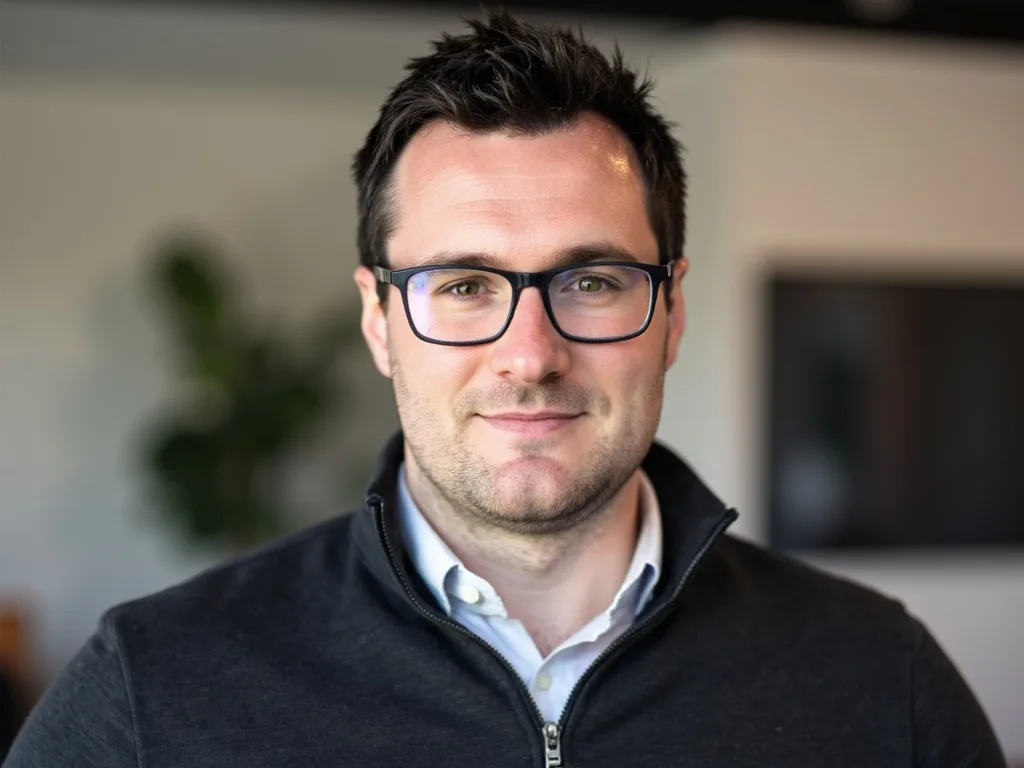
Jason Burns
Independent UK SEO, GEO and AI consultant. In search since 2007. Portfolio includes 3M, BlackRock, Unilever and E.ON. Owner of SEO Moves Ltd since 2014.
More about Jason →Internal stakeholders confused by the acronyms?
Send the brief or the proposal you have been given. I'll come back with a one-page translation - what they are actually proposing, whether it is worth the price, and what is missing.
Get a translation