Updated
Updated What changed on
Fact-checked Every crawler name, link, study figure and tool price on this page re-checked at the source on 14 October 2026, with figures and prices confirmed a second way, including the FAQ rich result retirement and the Reddit mention share. The 70/30 split, timelines and maturity levels are my own estimates, not findings.
- Swapped the crawler list for the search crawlers that decide AI search visibility (OAI-SearchBot, Claude-SearchBot, Claude-User, PerplexityBot, Googlebot, Bingbot). GPTBot, ClaudeBot and Google-Extended are training controls. Fixed the broken Google-Extended link and the ClaudeBot link that pointed at the wrong page.
- Added Cloudflare's new AI crawler settings: since 15 September 2026, a Training setting of Block also stops Googlebot and Bingbot.
- Added Google's July 2026 guide to its AI features, the Search Console generative AI control and report (worldwide since 31 August 2026), and Bing Webmaster Tools' AI Performance report.
- Corrected the schema advice: Google's July 2026 guide says no special schema is needed for AI search, and Ahrefs' 1,885-page test found no citation gain from adding it.
- Removed three figures that did not hold up: a 44% Ahrefs figure that is in neither study, a 38% Perplexity freshness figure whose source no longer resolves, and a 30-40% original-data figure that cites no study.
- Corrected the Reddit point: reddit.com is the most-mentioned domain in ChatGPT answers on Ahrefs' September 2026 US table, with a 16.8% mention share (Wikipedia is second at 7.0%), so "context, not citation" was wrong.
- Removed FAQPage from the schema row for Google rich results: Google stopped showing FAQ rich results on 7 May 2026 and removed the documentation on 15 June 2026.
How to improve AI search visibility across every engine.
The 30-second answer
To improve AI search visibility, first let the search crawlers in: OAI-SearchBot for ChatGPT, Claude-SearchBot and Claude-User for Claude, PerplexityBot for Perplexity, Googlebot for AI Overviews and AI Mode, and Bingbot for Copilot. Then check you are indexed in Bing and Brave as well as Google, put a named author on the page, and publish something only you can say. Eight items cover the core work. Roughly 70% of it serves all engines; 30% is engine-specific. If ChatGPT is the priority engine, use the how to rank in ChatGPT guide as the deeper checklist for Bing, OAI-SearchBot and extractable answers.
What the evidence supports, and what it does not
of URLs cited in Google AI Overviews appeared in the first 10 results blocks for that query. Ahrefs counts blocks, not organic results, so this is not the same as ranking in the top 10.
How it was measured: 863,000 keyword SERPs and 4 million AI Overview URLs. Ahrefs measures the top 10 as blocks, counting ads, featured snippets and video packs as separate blocks.
was Ahrefs' July 2025 figure. It counted only the top 3 citations per AI Overview, and Ahrefs has since changed its parsing, so the two years are not like for like.
How it was measured: 1.9 million citations from 1 million AI Overviews, analysing only the top 3 most visible citations in each one. Ahrefs notes it improved its parsing between this study and the 2026 update. Both differences mean the fall to 37.9% cannot be read as a like for like change.
fresher is the content AI assistants cite, compared with the content ranking in organic results.
How it was measured: 16.975 million cited URLs across ChatGPT, Perplexity, Gemini, Copilot, AI Overviews and organic Google. Average age of AI-cited pages was 1,064 days against 1,432 days for organic results. Published July 2025 and last revised April 2026, so it predates the 2026 shift Ahrefs measured in its own citation study.
is the average age of Google's top three AI Overview citations, which is the same as its organic results. The preference for fresh content does not hold for AI Overviews.
How it was measured: Same 17 million citation dataset. This is the counterweight to the headline freshness figure and is usually left out when that figure is quoted.
The eight items, ordered by impact
| Item | Matters most for | Effort | Why |
|---|---|---|---|
| Search crawler access (OAI-SearchBot, Claude-SearchBot and Claude-User, PerplexityBot, Googlebot, Bingbot) | All engines | 1 day | These are the crawlers that put you in AI search answers. GPTBot and ClaudeBot only control model training, and Google-Extended does not affect inclusion in Google Search. Watch Cloudflare: since 15 September 2026 its Training setting of Block, or Block on pages with ads on those pages, also stops Googlebot and Bingbot, while Disallow AI Training keeps them crawling for search. Cheapest fix, biggest impact when it applies. |
| Named author + Person schema | Perplexity, Claude, AIO | 1 week | E-E-A-T signal. Anonymous brand content loses to named-expert content. |
| Original content on priority topics | AIO, AI Mode | Ongoing | Google's July 2026 guide to its AI features says there is no ideal page length, and that unique, useful content will likely matter more than anything else in the guide. Rank alone will not do it: Ahrefs found 31.2% of AI Overview citations came from positions 11-100 and 31.0% from beyond the top 100. |
| Bing and Brave index health | ChatGPT, Copilot, Claude | 1 week | Microsoft Copilot Chat (formerly Microsoft 365 Copilot Chat) grounds web answers in Bing, and Bing Webmaster Tools now has an AI Performance report showing your Copilot citations. OpenAI names Microsoft as one of ChatGPT search's partners. Anthropic lists Brave Search as a web search subprocessor for Claude. |
| Content recency + dateModified hygiene | ChatGPT, Perplexity | Ongoing | Ahrefs' July 2025 study found ChatGPT's citations were the freshest by publish date (958 days old on average), while Perplexity's in-text citations averaged 1,166 days, second oldest after AI Overviews. Update pages when the facts change, not just the date. |
| Schema (Article, Person, Organization) | Google rich results | 1-2 weeks | Hygiene, not a citation lever. Ahrefs' May 2026 controlled test on 1,885 pages found adding schema did not raise citations: AI Overviews fell 4.6%, while AI Mode and ChatGPT moved by amounts indistinguishable from zero. Google's July 2026 guide says no special schema is needed for AI search, but it still helps rich-result eligibility. Google stopped showing FAQ rich results on 7 May 2026 and removed the documentation on 15 June 2026. FAQPage is still valid Schema.org markup, but it no longer earns a rich result. |
| Knowledge Graph + Wikipedia entity | Gemini | Months | Slow build. Pays off across Google AI surfaces. |
| Reddit and community presence | ChatGPT, AI Overviews | Months | reddit.com is the most-mentioned domain in ChatGPT answers on Ahrefs' September 2026 US table, with a 16.8% mention share, ahead of Wikipedia at 7.0%. BrightEdge reports Reddit passed Wikipedia in ChatGPT citations in May 2026. Shapes how AI engines understand your category. |
The shared 70%
Search crawler access, index health, a named author, original content and structural credibility signals serve every major AI engine. Google's own guide calls optimising for its AI features "still SEO". Get these right first; they compound across surfaces.
The engine-specific 30%
- ChatGPT: allow OAI-SearchBot and OpenAI's published search crawler IP addresses. OpenAI says sites that opt out of OAI-SearchBot will not be shown in ChatGPT search answers, and that robots.txt changes take about 24 hours to apply. ChatGPT search also partners with other search providers, with Microsoft named, so keep Bing healthy. Not every answer searches: Ahrefs found only 14.4% of 66.6 million logged-out ChatGPT responses in August and September 2026 ran a web search. For ChatGPT specifically, follow the ChatGPT ranking sequence before worrying about second-order GEO work.
- Copilot: Microsoft Copilot Chat (formerly Microsoft 365 Copilot Chat) grounds web answers in Bing. Verify in Bing Webmaster Tools and check its AI Performance report, which now counts citations across Copilot and Bing's AI summaries.
- Claude: allow Claude-SearchBot, which indexes pages for Claude's search, and Claude-User, which fetches pages when someone asks. ClaudeBot is the training crawler. Anthropic lists Brave Search as a web search subprocessor, so check your key pages show up in Brave.
- Perplexity: allow PerplexityBot. Perplexity's crawler docs say it surfaces and links sites in Perplexity's results and is not used to crawl content for AI models. Perplexity-User fetches pages for a user's request and generally ignores robots.txt. Refresh content when the facts change.
- Gemini and AI Mode: Google ecosystem signals: YouTube and Knowledge Graph. Google's guide says its AI features are rooted in its core Search ranking and quality systems, so normal Google SEO comes first.
- AI Overviews: rank helps but is not deterministic. In Ahrefs' March 2026 study, 37.9% of cited URLs ranked in the top 10, 31.2% in positions 11-100 and 31.0% beyond the top 100. Check Search Console's generative AI control is set to Include: Exclude removes your site from AI Overviews and AI Mode.
What does NOT improve AI visibility
- Paying for ChatGPT Plus or Perplexity Pro.
- Submitting your site to AI engines directly (they crawl).
- Stuffing prompts into your content (the model sees through this).
- Hiding AI-only content behind a cloak.
- Buying AI-engine "boost" packages from agencies selling exactly that.
- For Google, llms.txt files, "chunking" content into small pieces, rewriting pages just for AI, or chasing inauthentic mentions. Google's July 2026 guide lists all four as things you can ignore for Google Search.
The highest-impact single move: publish original data
Google's July 2026 guide to its AI features is blunt about it: "Don't just recycle what others on the internet have already said". It adds that unique, useful content will likely shape your presence in generative AI search more than any other suggestion in the guide. Official sources get cited too: in an Ahrefs test of 20,000 US prompts, published October 2026, 84.4% of factual questions about pricing, product features or company details cited at least one official source. A statistic that exists nowhere else has only one page to be cited from: yours.
The practical version: stop rewording everyone else's research. Run one small study a quarter (a sample of 50 sites, 10 client interviews, a manual SERP audit) and publish the methodology + numbers. One sourceable original data point on a priority page outperforms three months of refreshing existing content.
Common questions on AI search visibility
Is SEO dead in 2026? No. Traditional Google search still drives the majority of organic discovery for most UK B2B verticals (StatCounter, Semrush). LLM referrals grew 72.7% YoY per Duda/SEJ April 2026 - but from a smaller base. AI answers also sit inside Google itself: Google reports AI Overviews has over 2.5 billion monthly active users and AI Mode has passed one billion monthly users. SEO is changing under AI Overview pressure, not dying. Most teams should run both as one programme.
What are the best AI search visibility tools? Free baseline: the AI Search Visibility tool on this site. Free first-party data: the Generative AI performance report in Google Search Console and AI Performance in Bing Webmaster Tools. Paid tracking for mid-market: AIClicks ($59/mo), Otterly ($29/mo), both checked on their pricing pages in October 2026. Enterprise: Profound or BrandLight. Full ranked picks in the best AI rank trackers UK listicle.
How do I optimise AI search results when there is no rank? AI engines do not return a ranked list, but the citation pool is finite. Make sure you are in the pool (search crawler access + Bing and Google indexing + named author) and the cited share-of-voice metric becomes measurable. You are not chasing rank 1 - you are chasing presence in the citation pool plus depth that wins repeated citation.
More on cross-engine visibility.
Is AI visibility the same across all engines?
No. Each engine finds pages in its own way. ChatGPT search uses OpenAI's own crawler, OAI-SearchBot, plus search partners, with Microsoft named. Claude uses Claude-SearchBot and Claude-User, and Anthropic lists Brave Search as a web search subprocessor. Perplexity finds and links sites through PerplexityBot. Gemini draws on Google authority plus YouTube and Knowledge Graph. AI Overviews and AI Mode are rooted in Google's core Search ranking systems, but in Ahrefs' March 2026 study only 37.9% of AI Overview citations ranked in the top 10. The shared foundation matters but engine-specific tuning matters too.
How long until AI visibility work shows results?
Technical fixes (crawler access) show in days. OpenAI says ChatGPT search takes about 24 hours to pick up a robots.txt change. Content depth changes take three to six months across engines as they re-crawl and re-evaluate. Community presence work (Reddit, vertical forums) takes six to twelve months to build into citation patterns.
What is the cheapest thing I can do today?
Verify your search crawler access. Use the free AI Bot Robots.txt Tester on this site to check OAI-SearchBot, Claude-SearchBot, PerplexityBot, Googlebot, Bingbot and others. Those crawlers decide if you can appear in AI search. GPTBot and ClaudeBot control model training. Google-Extended covers Gemini training and grounding in the Gemini app, not Google Search. On Cloudflare, check the Training setting for AI crawlers: since 15 September 2026, Block (and Block on pages with ads, on those pages) also stops Googlebot and Bingbot, while Disallow AI Training keeps them crawling for search. If a search crawler is blocked, that is the cheapest fix and often the highest-impact one.
Do I need separate work for each engine?
Mostly no. About 70% of AI visibility work serves all engines (crawler access, index health, named author, original content). The remaining 30% is engine-specific: Bing for Copilot and ChatGPT, Brave for Claude, Reddit for ChatGPT, Knowledge Graph for Gemini, and the Search Console generative AI setting for AI Overviews and AI Mode.
How do I measure AI visibility?
Start with the free AI Search Visibility tool for a baseline. Then add the two free first-party reports: the Generative AI performance report in Google Search Console (impressions in AI Overviews and AI Mode) and AI Performance in Bing Webmaster Tools (citations in Copilot and Bing's AI summaries). Move to a paid tracker (Profound, AIClicks, Otterly) for ongoing monitoring once you have a defined GEO programme. Sample weekly or fortnightly - daily creates noise because AI outputs vary per session.
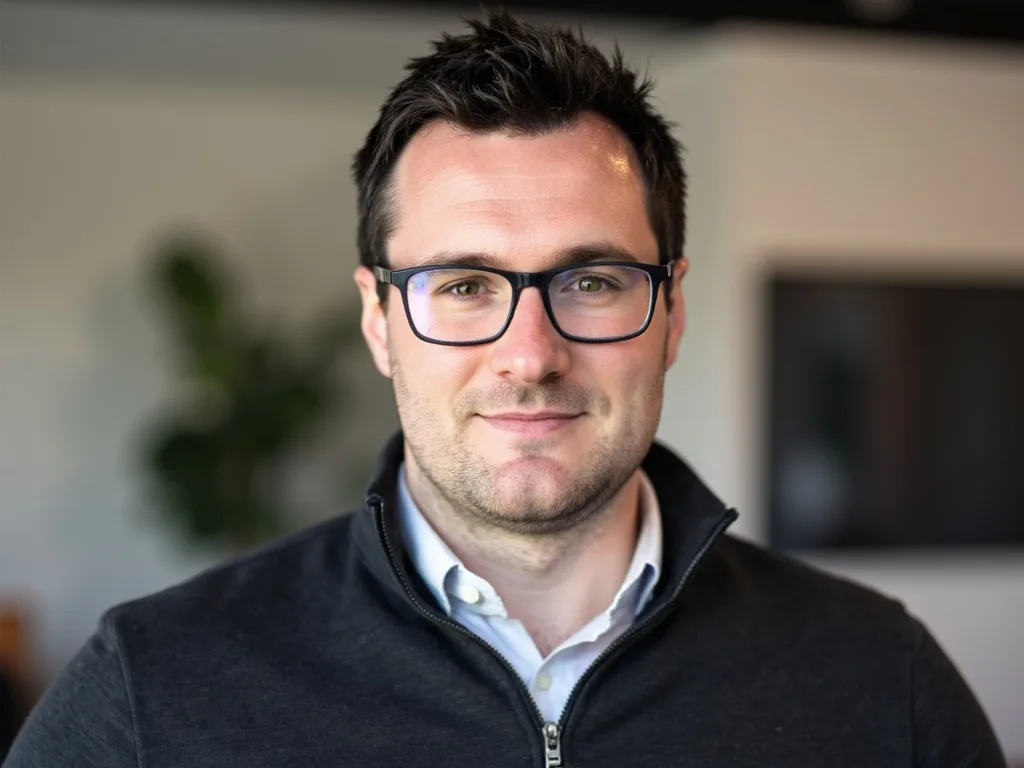
Jason Burns
Independent UK SEO, GEO and AI consultant. In search since 2007. Portfolio includes 3M, BlackRock, Unilever and E.ON. Owner of SEO Moves Ltd since 2014.
More about Jason →Want a baseline reading before you start?
Run the free AI Search Visibility tool on your brand for a quick reading. Or send your priority queries and I run them across four engines and send the full diagnostic back.
Get the diagnostic