Updated
Updated What changed on
Fact-checked The GEO paper's results table and publication details were re-checked on arXiv on 14 October 2026, and the crawler, Cloudflare, Reddit, AIClicks and OpenAI facts above were re-checked against the 14 October 2026 source checks. The DeepCrawl rename and redirect were checked on lumar.io and deepcrawl.com on 14 October 2026. Nothing else on the page was re-checked.
- Corrected the GEO paper figure: its four strongest rewriting methods raised a page's share of the AI answer by 27% to 41%, not 22% to 41%.
- Named the methods the paper actually tested (statistics, quotations, cited sources and fluent wording) and noted it was published at KDD 2024.
- Corrected the remaining places, including two FAQ answers, that credited the GEO paper to Princeton alone. The published version lists Princeton, IIT Delhi and others.
- Corrected which bots matter for AI search: OAI-SearchBot, Claude-SearchBot, PerplexityBot and Googlebot. GPTBot and ClaudeBot only control training. Google-Extended is a robots.txt token for Gemini training and grounding that never shows in server logs.
- Corrected the Cloudflare date: it began blocking AI crawlers by default from 1 July 2025, not 2024. Added that since 15 September 2026 its Block setting also stops Googlebot, Bingbot and Applebot.
- Corrected the Reddit figure: the "two-thirds" (67.8%) was Reddit's share of pages ChatGPT retrieved but did not cite, not how often it retrieves Reddit. Reddit was the most-mentioned domain in ChatGPT answers in Ahrefs' September 2026 US data, at 16.8%.
- Fixed the AIClicks link, which pointed to an unrelated site, and updated the OpenAI crawler documentation link to its new address.
- Renamed the DeepCrawl crawling tool to Lumar, the name it has used since September 2022, and pointed the link at lumar.io. The old deepcrawl.com address now redirects there.
SEO consultant vs GEO consultant: which do I need?
The 30-second answer
An SEO consultant grows visibility in Google and Bing. A GEO consultant grows visibility in ChatGPT, Perplexity, Gemini and Google AI Overviews. The day-to-day work overlaps about 80% - same technical health, same content depth, same authority foundations - and the remaining slice (citation tracking, AI bot access, community surface, entity work) takes a single quarter for a working SEO to absorb. Hire one senior practitioner who does both. The three vetting questions and the pricing pattern below tell you which candidate is which.
The measured gap between the two jobs
of URLs cited in Google AI Overviews appeared in the first 10 results blocks for that query. Ahrefs counts blocks, not organic results, so this is not the same as ranking in the top 10.
How it was measured: 863,000 keyword SERPs and 4 million AI Overview URLs. Ahrefs measures the top 10 as blocks, counting ads, featured snippets and video packs as separate blocks.
was Ahrefs' July 2025 figure. It counted only the top 3 citations per AI Overview, and Ahrefs has since changed its parsing, so the two years are not like for like.
How it was measured: 1.9 million citations from 1 million AI Overviews, analysing only the top 3 most visible citations in each one. Ahrefs notes it improved its parsing between this study and the 2026 update. Both differences mean the fall to 37.9% cannot be read as a like for like change.
of links cited by ChatGPT, Gemini and Copilot appear in Google's top 10 for the same prompt. Perplexity is the outlier at closer to one in three.
How it was measured: 15,000 prompts. This is 2025 data and has not been re-run, so treat it as directional rather than current.
What an SEO consultant actually does day-to-day
The work pattern across a senior SEO retainer in 2026 looks roughly the same as it did in 2022, with one big content adjustment. Inside a typical month:
- Technical health. Crawl audits in Screaming Frog or Lumar (formerly DeepCrawl). Core Web Vitals monitoring. Index coverage in Search Console. Schema validation. Sitemap and canonical hygiene.
- Keyword and intent research. Query mining in Ahrefs or Semrush. SERP feature reads. Intent classification (informational, commercial, transactional). Mapping queries to pages.
- On-page work. Title and meta drafts. Heading hierarchy. Internal link audits. Content briefs for new pages, refresh briefs for stale ones.
- Authority building. Digital PR campaigns. Link earning via original research or data. Brand mentions and citations. Author entity work where E-E-A-T matters.
- Reporting. Rankings against named competitors. Organic traffic and conversions from organic. Page-level performance. Quarterly review against agreed targets.
What a GEO consultant adds on top
A genuine GEO scope is the SEO scope above, plus a small set of new disciplines that match how generative engines actually choose sources. The step-by-step GEO field guide on this site lays the additions out in the order I'd run them:
- AI citation tracking. Weekly or fortnightly sampling against named competitor prompts in Profound, AIClicks or Otterly. Share of voice in answers. Mention accuracy. Citation rate against agreed prompt sets.
- Bot access management. Documented robots.txt audit. Cloudflare default-block checks (Cloudflare began blocking AI crawlers by default from 1 July 2025, and since 15 September 2026 its Block setting also stops Googlebot, Bingbot and Applebot, search included). Verification that OAI-SearchBot, Claude-SearchBot, PerplexityBot and Googlebot can actually reach the site, plus a deliberate choice on the training controls (GPTBot, ClaudeBot and the Google-Extended robots.txt token).
- Reddit and community cadence. An Ahrefs analysis of ChatGPT citations showed reddit.com is the most-mentioned domain in ChatGPT answers (16.8% in Ahrefs' September 2026 US data). A sustainable subreddit and community-publishing presence (not spam) becomes part of scope.
- Entity surface. Wikidata, Wikipedia (where the verifiability rule allows), Crunchbase, LinkedIn company schema, named-author Person schema. Making sure the brand is recognised as an entity across the open web, not only on its own site.
- Extraction-friendly content. Definitions first. Comparison tables. Marked-up FAQs. Statistics with sources. Aggarwal et al. (KDD 2024, arXiv 2311.09735) found that adding statistics, quotations and cited sources, plus more fluent wording, raised a page's share of the AI answer by 27% to 41% in their tests.
The side-by-side
| What you compare | SEO consultant | GEO consultant |
|---|---|---|
| Primary goal | Rank in Google and Bing | Be cited inside AI answers |
| Engines optimised for |


|


|
| Headline tools | Screaming Frog, Ahrefs or Semrush, Search Console, GA4 | All of those, plus Profound or AIClicks or Otterly for citation tracking |
| Output format | Ranked list of links | Synthesised single answer with 2-7 cited sources |
| Authority signals | Backlinks, domain authority, on-page relevance | Entity recognition, citation density, source consistency, named author |
| Headline KPI | Organic rankings + traffic + conversions | Share of voice in AI answers + citation rate + mention accuracy |
| Reporting cadence | Monthly or fortnightly | Same, with weekly citation sampling for fast-moving prompts |
| Typical retainer (UK) | £3-6k per month | £3-6k per month for the same scope - higher only if real volume of citation tracking is in scope |
| One-off audit (UK) | £1,500-3,500 | £1,500-5,000 (the upper end reflects multi-engine prompt testing) |
| What stays the same | Technical health, schema, structured content, named-author authority, internal linking, content briefs, freshness hygiene | |
Why most "GEO consultant" hires are unnecessary
Strip the marketing and most GEO retainers in the UK are a senior SEO retainer with three additions bolted on: a citation tracker, a bot-access checklist, and content reformatted for extraction. That is the same practice with a wider lens, not a separate profession. The GEO paper by Aggarwal et al. (Princeton, IIT Delhi and others; KDD 2024) put numbers on the content-craft adjustments - density of citations in the page, statistic-led phrasing, fluency tightening - and found that these methods, plus adding quotations, raised a page's share of the AI answer by 27% to 41%. None of that is unlearnable; a working SEO who reads the paper can apply it inside a quarter.
The career-evolution argument matches what I see in the UK market. Consultants who absorbed the new disciplines either kept the SEO title or rebadged to GEO with the same skill stack. Consultants who skipped the learning are the ones whose work is decaying now. WOWebsites framed this as "career evolution, not career change" in March 2026 and that is broadly the right read.
The three questions that separate practitioner from repackager
Three answers expose the difference, for a current consultant or a new hire. Look for named tools, a specific sampling cadence, and acknowledgement of trade-offs.
- Citation tracking: which named platform (Profound, AIClicks, Otterly are the obvious ones) do they sample, and on what cadence? A real practitioner runs weekly or fortnightly against an agreed prompt set; a repackager waves at "monitoring".
- Bot access: have they actually verified OAI-SearchBot, Claude-SearchBot, PerplexityBot and Googlebot can reach the site? Cloudflare's default AI-crawler block (from 1 July 2025) and its 15 September 2026 changes still catch sites; a real answer mentions log verification or fetch-as-bot, not just robots.txt edits.
- Community surface: Reddit's role in Perplexity citations and ChatGPT answers (reddit.com was the most-mentioned domain in ChatGPT answers in Ahrefs' September 2026 US data, at 16.8%) is now load-bearing. A real answer has a sustained-posting plan, not a spam tactic.
The pricing tell
UK ranges are broadly similar across both disciplines. A one-off audit sits between £1,500 and £5,000 depending on site size; independent consultants charge £500-2,000 per day. A GEO retainer should cost about the same as an SEO retainer at equivalent scope, because most of the work is the same work. The premium-on-rebrand pattern is when a "GEO consultant" prices at 1.5-2x the equivalent SEO scope and the deliverables look identical line-by-line. Ask for the deliverable list. If it is "AI search audit", "AI search strategy", "ongoing optimisation" with no tools named and no cadence specified, you are paying SEO money for SEO wrapped in different vocabulary.
Honest framing: the case for a separate GEO hire is weaker than the marketing suggests. If your current practitioner has adjusted (named tracker, named cadence, named bot-access tools, real community-surface work), adding a second is double-pay for one job. If they have not adjusted, switch them. The economics of running two retainers in parallel are dissected on the dedicated do I need both page.
What good looks like
A senior consultant who can show:
- AI citation reports against named competitors from the last 3+ months, with prompt sets and engines specified
- Documented bot access audits (robots.txt, Cloudflare config, server log verification)
- Named-author Person schema on the consultant's own site - if they cannot do it for themselves, they cannot do it for you
- Honest case studies that acknowledge what did not work as well as what did
- A portfolio that includes recent AI-search-specific case studies, not only SEO retainers from 2022
- Clear deliverable lists with tool names and cadences, not vocabulary
When the two-role split is genuinely operational
At enterprise volume - large in-house marketing function, many priority pages, regulated business units, multiple regions in play - one consultant runs out of hours before the work runs out of scope. Splitting the role there is a question of capacity, not capability. That is the FTSE 100 / Fortune 500 pattern. For everyone below that scale, the boundary-dispute economics that drive cost up and clarity down sit in detail on the do I need both follow-up - I do not repeat them here.
Sources used here
- Aggarwal et al., GEO: Generative Engine Optimization (KDD 2024) - the four strongest rewriting methods lifted a page's share of the AI answer by 27% to 41%
- Ahrefs - most-cited domains in ChatGPT (Reddit's share of mentions in ChatGPT answers, September 2026)
- Incremys - GEO consultant scope and pricing (audit and day-rate ranges)
- WOWebsites - From SEO to GEO (career-evolution argument, March 2026)
- OpenAI - crawler documentation (OAI-SearchBot, GPTBot, ChatGPT-User, OAI-AdsBot)
- Search Engine Journal - ChatGPT and Reddit retrieval
More on the hire question.
What does an SEO consultant actually do?
An SEO consultant grows organic visibility in Google and Bing through technical health (crawl, index, Core Web Vitals), on-page work (titles, headings, internal links), content briefs against keyword and intent research, and authority building (digital PR, link earning). The reporting frame is rankings, organic traffic and conversions from organic.
What does a GEO consultant actually add?
On top of SEO foundations, a GEO consultant adds AI citation tracking against named competitors across ChatGPT, Perplexity, Gemini and Google AI Overviews; bot access management for the search crawlers (OAI-SearchBot, Claude-SearchBot, PerplexityBot, Googlebot), with GPTBot, ClaudeBot and Google-Extended handled as training controls; entity work to make sure the brand is recognised across the open web; extraction-friendly content formats (definitions, comparison tables, marked-up FAQs); and a Reddit and community presence where engines weight it. The reporting frame is share of voice in AI answers, citation rate and mention accuracy.
How much overlap is there between the two roles?
Roughly 80%. Both rely on technical health, structured content, named-author authority and topical depth. The remaining slice - citation tracking, bot access, community surface, entity work - is concrete enough that a working SEO absorbs it inside a quarter once they read the GEO paper (Princeton, IIT Delhi and others, KDD 2024) and pick a citation tracker. That is why a single senior practitioner usually wins on coherence and cost.
What does each engagement cost in 2026?
UK ranges are broadly similar. A one-off audit sits between £1,500 and £5,000 depending on site size, and independent consultants charge £500-2,000 per day. A GEO retainer should cost about the same as an SEO retainer at equivalent scope. If a GEO consultant prices at 1.5-2x for the same deliverables, that is the premium-on-rebrand pattern.
What questions tell me a GEO consultant is real?
Three: which citation platform do they sample, and on what cadence? Have they verified the named AI crawlers can actually fetch the site (log evidence, not robots.txt theatre)? What is their concrete community-surface plan given Reddit's load-bearing role in Perplexity and ChatGPT? Named tools, named cadence, named platforms = real. Vocabulary without nouns = repackager.
Is it ever right to hire both?
At enterprise volume - large in-house marketing function, regulated units, many regions - the split is operational, not skill-based. Below that scale, one senior covering both wins on cost and coherence. The boundary-dispute economics behind that are on the do I need both page.
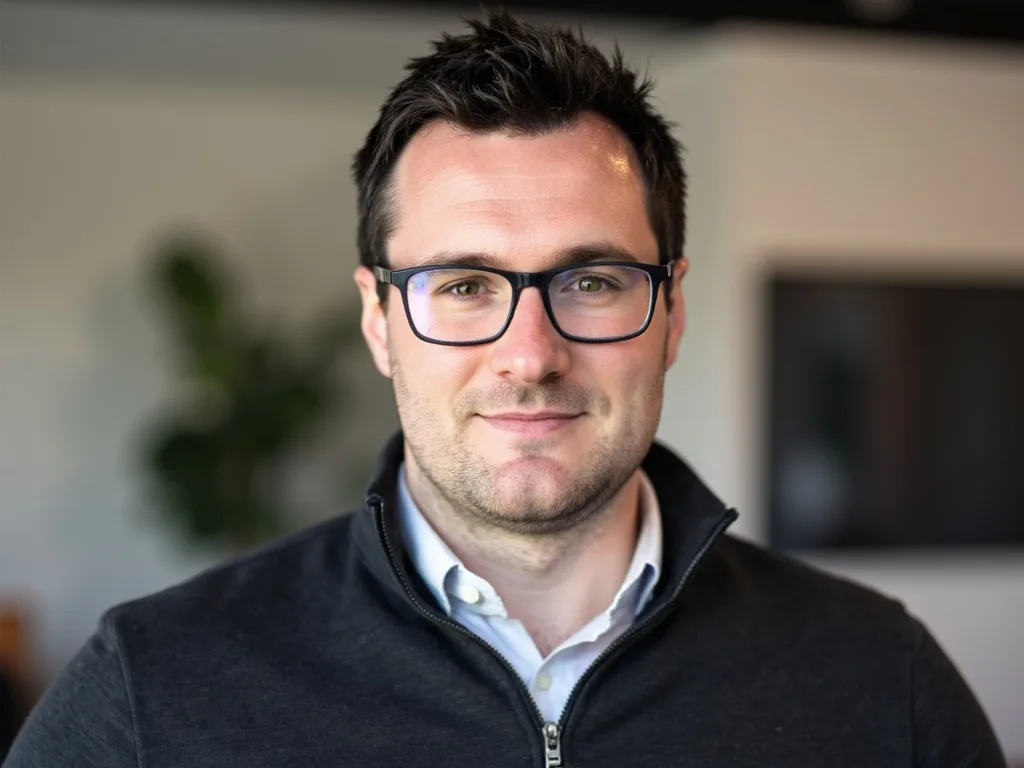
Jason Burns
Independent UK SEO, GEO and AI consultant. In search since 2007. Portfolio includes 3M, BlackRock, Unilever and E.ON. Owner of SEO Moves Ltd since 2014.
More about Jason →Vetting a GEO consultant proposal right now?
Send the scope or proposal. I tell you in plain English what is good work, what is rebranded SEO and what is missing. Quick read, no follow-up sequence.
Get a second opinion