Updated
Updated What changed on
Fact-checked Only the Reddit figure, the AI crawler names and the OpenAI and AIClicks links were re-checked against the 14 October 2026 source checks. Nothing else on the page was re-checked.
- Corrected the Reddit figure: Ahrefs data reported by Search Engine Journal found 67.8% of the pages ChatGPT retrieved but did not cite came from Reddit. It is not how often ChatGPT retrieves Reddit.
- Corrected the AI bot advice: OAI-SearchBot, Claude-SearchBot and PerplexityBot control search visibility, while GPTBot and ClaudeBot only control training.
- Updated the OpenAI crawler documentation link and the AIClicks link to their current addresses.
Do I need both an SEO and a GEO consultant? Almost never.
The 30-second answer
For UK businesses under 50 marketing staff, no. The two disciplines share about 80% of the work and one senior covering both is 40-50% cheaper than splitting the brief. Splitting creates boundary disputes by month three (who owns schema? content briefs? citation tracking?) and you pay for two retainers to do one job. The genuine exception is enterprise scale where operational volume - not skill gap - justifies the split. Almost every other "I need a GEO consultant on top" conversation is either an SEO consultant who has not updated, or a vendor selling positioning.
The evidence for and against doing both
of URLs cited in Google AI Overviews appeared in the first 10 results blocks for that query. Ahrefs counts blocks, not organic results, so this is not the same as ranking in the top 10.
How it was measured: 863,000 keyword SERPs and 4 million AI Overview URLs. Ahrefs measures the top 10 as blocks, counting ads, featured snippets and video packs as separate blocks.
was Ahrefs' July 2025 figure. It counted only the top 3 citations per AI Overview, and Ahrefs has since changed its parsing, so the two years are not like for like.
How it was measured: 1.9 million citations from 1 million AI Overviews, analysing only the top 3 most visible citations in each one. Ahrefs notes it improved its parsing between this study and the 2026 update. Both differences mean the fall to 37.9% cannot be read as a like for like change.
of links cited by ChatGPT, Gemini and Copilot appear in Google's top 10 for the same prompt. Perplexity is the outlier at closer to one in three.
How it was measured: 15,000 prompts. This is 2025 data and has not been re-run, so treat it as directional rather than current.
Why the two-consultant model almost always loses
The premise behind hiring a GEO consultant on top of an SEO consultant is that AI search is a separate discipline. It is not. Around 80% of the work that gets a brand cited in ChatGPT, Perplexity, Google Gemini and AI Overviews is recognisable as SEO: schema, named author, content depth, technical health, brand authority, content that answers a question rather than ranks for a phrase. Google's own search team has gone on record that there are no additional technical requirements for appearing in AI features beyond existing SEO fundamentals.
The 20% that is genuinely new is operational, not strategic. AI citation tracking (Profound, AIClicks, Otterly). Bot access management for the search crawlers (OAI-SearchBot, Claude-SearchBot and PerplexityBot) and the training controls (GPTBot, ClaudeBot). Reddit and community presence for engines that weight community sources heavily (Ahrefs data reported by Search Engine Journal found 67.8% of the pages ChatGPT retrieved but did not cite came from Reddit). Content rewriting for citability rather than rankability. The complete GEO field guide on this site sets out the 20% in the order one senior would run it, which is why a second hire on top rarely earns its keep. It needs a senior who has updated their playbook, not a separate hire.
Split the brief between two people and you get the predictable failure pattern: two retainers, two reports, two opinions about which page to prioritise this month, and reconciliation calls that consume the budget you thought you were saving by hiring specialists.
What one consultant covers vs what splitting actually duplicates
The work itself does not divide cleanly. Most of the deliverables a "GEO consultant" lists are already owned by a senior SEO consultant, which is what creates the boundary fight.
| Deliverable | Owned by combined consultant | What splitting adds |
|---|---|---|
| Schema and structured data | Yes - core SEO since 2014 | Duplication. GEO consultant flags the same FAQPage and Person markup the SEO consultant should already own. |
| Content depth and citability | Yes - same writing standard either way | Friction. Two briefs per page, two review cycles, content team waiting on alignment. |
| Technical foundations (crawl, render, indexing) | Yes - SEO core | Nothing useful. AI crawlers care about the same things Googlebot cares about. |
| AI citation tracker (Profound, AIClicks, Otterly) | Yes - tooling addition, not skill change | A second monthly subscription on a separate dashboard. |
| Bot access audit (OAI-SearchBot, Claude-SearchBot, PerplexityBot, plus GPTBot and ClaudeBot as training controls) | Yes - one robots.txt review per quarter | Coordination overhead - GEO consultant requests, SEO consultant implements, both bill for it. |
| Reddit and community presence | Yes - extension of digital PR | Genuinely new for purist SEO consultants. Marginal hire if the rest is already covered. |
| Unified monthly reporting | Yes - one report covering both | Two reports, no single owner for "is this working?". |
The pricing tell
A senior UK SEO/GEO consultant covering both disciplines typically charges £3,000-£6,000 per month at small-to-mid scale. Splitting the brief between an SEO consultant and a separate GEO consultant typically runs £5,000-£10,000 per month for the same operational scope. The premium is not 1.7-2x because the work is harder. It is because you are paying for the overlap twice and the coordination on top.
Six-month operational comparison - typical mid-market UK retainer
The maths gets worse over time, not better. Coordination overhead compounds as both consultants accumulate context the other lacks. By month nine, most split arrangements either collapse into one consultant taking ownership or quietly become a single-consultant-plus-a-tool subscription.
The exception: genuine enterprise scale
The split model works when the constraint is operational volume rather than skill coverage. 50+ marketing staff. Hundreds of priority pages. Multiple regulated business units with separate compliance reviews. Regional teams with separate languages and search markets. At that scale a single consultant cannot physically cover the work even when the underlying discipline is unified - so splitting into "SEO operations" and "AI search specialist" stops being a skill question and becomes a capacity question.
The brands actually running this split in 2026 tend to sit at FTSE 100 / Fortune 500 scale with separate digital marketing and digital innovation teams already in place. Below that scale, one senior is almost always the right answer.
When your current SEO consultant has not adjusted
The instinct in this situation is to bolt a GEO consultant on top. That is the wrong move. You end up double-paying for one job and importing the boundary problem above. The right move is replacement - hire a senior who covers both, or switch your existing consultant for one who has updated their playbook.
Three diagnostic questions to ask your current SEO consultant before deciding which of those is needed:
- Which AI citation tracker is in your stack and what does the dashboard look like? The expected answer names one of Profound, AIClicks, Otterly or similar and offers to show you the live monitoring. Vague answers ("we are looking at options") mean the tooling is not in place.
- How are OAI-SearchBot and GPTBot managed for our site - allow, block, or partial? OAI-SearchBot decides whether you can appear in ChatGPT search. GPTBot only controls whether OpenAI trains on your content. The expected answer is specific and references your
robots.txtdirectly. If they cannot tell you within a minute, bot access is not being managed. - What is our approach to Reddit and community presence given ChatGPT retrieves Reddit heavily? The expected answer covers brand mentions in relevant subreddits, founder presence where appropriate, and existing thread monitoring. Hedging here is the clearest sign the playbook stopped at 2023.
Honest framing: if your current consultant has solid answers to all three, you already have a GEO consultant - they just call themselves an SEO consultant. Adding a second one is paying twice for ground already covered. If they hedge on two or more, you need to switch them, not add to them. Either way, the answer is rarely "hire both".
How to decide in 60 seconds
- Under 50 marketing staff, current consultant updated: stay with one consultant. Add tracker tooling if missing. Done.
- Under 50 marketing staff, current consultant has not updated: replace, do not add. Switch to a senior covering both.
- Enterprise scale (50+ marketing staff, regional teams, regulated units): splitting roles is an operational decision, not a skill one. Run it as SEO operations + AI search specialist with a single accountable owner above both.
- You are an agency considering "GEO consultant" as a hire: hire a senior SEO who covers AI search. Job title on the contract matters less than what is in the playbook.
Primary sources used here
- Google Search Central - AI features documentation (no additional technical requirements beyond existing SEO fundamentals)
- Search Engine Journal / Ahrefs - ChatGPT often retrieves but rarely cites Reddit pages (67.8% of the pages retrieved but not cited were Reddit; pages from Ahrefs' dedicated Reddit source were cited 1.93% of the time)
- OpenAI - crawler documentation (OAI-SearchBot for search, GPTBot for training)
- Profound, AIClicks, Otterly - AI citation tracking platforms referenced in the diagnostic questions
More on the two-consultant question.
Do I need both an SEO and a GEO consultant?
Almost never for UK businesses under 50 marketing staff. The two disciplines share about 80% of the work - schema, named author, technical foundations, content depth, link authority. One senior covering both is 40-50% cheaper than splitting the brief and removes the boundary disputes that slow split engagements down by month three.
What does an SEO consultant covering GEO actually do that a "pure SEO" one does not?
Four operational additions: AI citation tracking (Profound, AIClicks, Otterly or similar), OAI-SearchBot / Claude-SearchBot / PerplexityBot access auditing in robots.txt and server logs (with GPTBot and ClaudeBot handled as training controls), content-citability rewrites (specific attributable claims instead of vague marketing prose), and Reddit / community presence work for engines that weight community sources heavily. None of these need a separate consultant - they need a senior who has updated their playbook.
When does the two-consultant model actually work?
Genuine enterprise scale - 50+ marketing staff, hundreds of priority pages, multiple regulated business units, regional teams. At that volume one consultant cannot physically cover the operational work even if the discipline is unified. Splitting roles (SEO operations + AI search specialist) then becomes an operational decision, not a skill one. Brands actually running this split are typically FTSE 100 or Fortune 500.
What if my current SEO consultant cannot do AI search?
Replace, do not add. Stacking a "GEO consultant" on top of an SEO consultant who has not adjusted creates two retainers doing one job, with the GEO consultant flagging schema gaps the SEO consultant should already own. The right move is hiring a senior who covers both, or switching to one who does.
Do agencies handle both SEO and GEO under one roof?
Most established UK SEO agencies have folded GEO into their existing service in 2025-26. Some have spun up dedicated "GEO" or "AI search" sub-brands as a positioning exercise rather than a separate practice. Ask which team member is named on the contract, whether their playbook covers AI citation tracking and bot access, and what AI-specific deliverables show up in monthly reporting. If the answer is vague, the GEO label is marketing.
How do I test whether a "GEO consultant" is genuine or repackaged SEO?
Three diagnostic questions. One: which AI citation tracker is in your stack and what does the dashboard look like? Two: how are OAI-SearchBot (ChatGPT search) and GPTBot (training) managed on our site - allow, block, or partial? Three: what is our Reddit and community presence approach, given Ahrefs data reported by Search Engine Journal found 67.8% of the pages ChatGPT retrieved but did not cite came from Reddit? Vague answers on any of those mean the GEO claim is positioning, not practice.
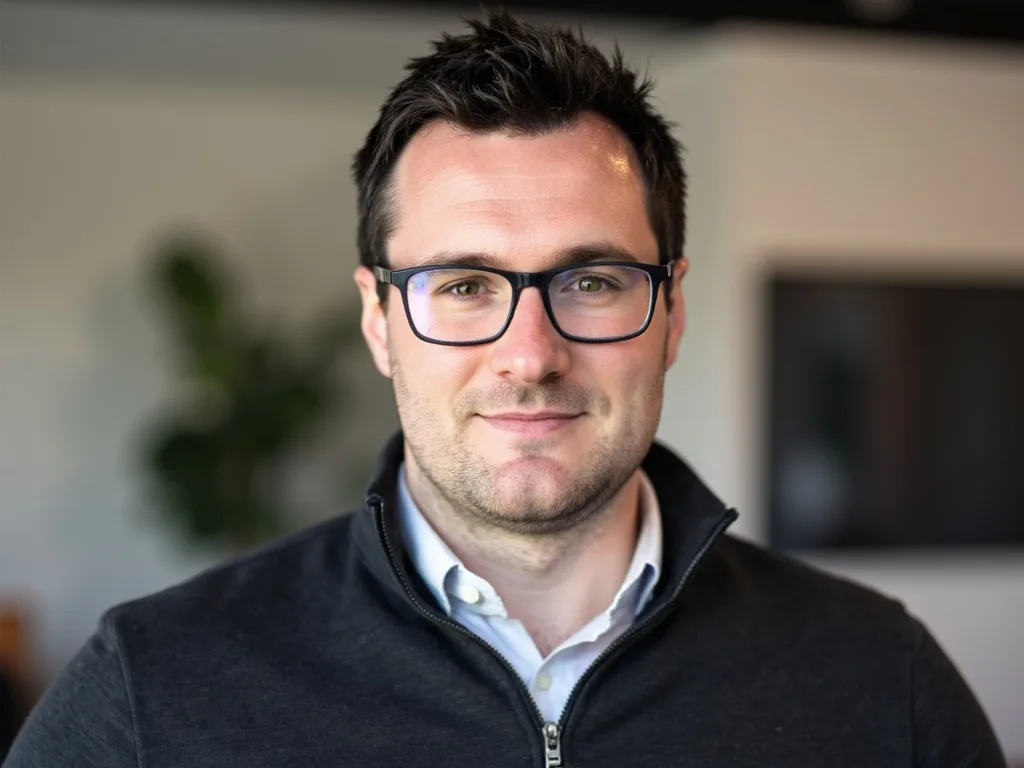
Jason Burns
Independent UK SEO, GEO and AI consultant. In search since 2007. Portfolio includes 3M, BlackRock, Unilever and E.ON. Owner of SEO Moves Ltd since 2014.
More about Jason →Stuck deciding whether to switch or add?
Send your current consultant's monthly report or last scope document. I tell you whether they have adjusted for AI search or not, and whether the right move is to switch them or stay with them.
Get a second opinion