Updated
Updated What changed on
Fact-checked Every model, plan, price, context window and crawler name re-checked on Anthropic's and OpenAI's own pages on 14 October 2026, with prices and context limits confirmed a second way. The StatCounter wording and Claude's web search provider were re-checked against the 14 October 2026 source checks.
- Updated the current models to Claude Opus 5.5, Sonnet 5.5 and Haiku 5.5 (plus Fable 5.1) and GPT-6, which started rolling out as the ChatGPT chat model on 7 October 2026.
- Removed ChatGPT Atlas, which OpenAI retired with a stop date of 9 August 2026, and added that custom GPTs retire on 11 December 2026.
- Replaced the OSWorld head-to-head: OpenAI lists GPT-5.5 at 78.7%, not 75%, and the two vendors now test on different OSWorld versions.
- ChatGPT now has more than 1.2 billion weekly users by OpenAI's own count, up from the 900 million quoted before.
- Fixed the StatCounter link, which had started showing browser data, and updated ChatGPT's UK chatbot share to about 80% for September 2026.
- Added deep research access, context window sizes, US plan prices and Anthropic's three crawler names.
- StatCounter's UK figures now say chatbot referrals, not use. It measures referral traffic, not users.
- Removed the claim that Claude favours verifiable primary sources, which no primary source supports. Anthropic lists Brave Search as Claude's web search provider.
Claude vs ChatGPT for research: which one to default to.
The 30-second verdict
For research where accuracy and source credibility matter more than coverage, Claude. For breadth, speed and general use, ChatGPT. When I wrote this in May 2026, Claude hedged more when sources were weak and ChatGPT answered confidently more often; that is my judgement, not a measured result. Most research professionals use both - Claude for the long-document and verifiable-claim work, ChatGPT for everything else. For SEO/GEO citation work, ChatGPT has bigger reach (about 80% of UK AI chatbot referrals in September 2026, per StatCounter). Anthropic lists Brave Search as Claude's web search provider, so Brave coverage and Claude-SearchBot access both matter.
What is measured about how these assistants choose sources
of links cited by ChatGPT, Gemini and Copilot appear in Google's top 10 for the same prompt. Perplexity is the outlier at closer to one in three.
How it was measured: 15,000 prompts. This is 2025 data and has not been re-run, so treat it as directional rather than current.
fresher is the content AI assistants cite, compared with the content ranking in organic results.
How it was measured: 16.975 million cited URLs across ChatGPT, Perplexity, Gemini, Copilot, AI Overviews and organic Google. Average age of AI-cited pages was 1,064 days against 1,432 days for organic results. Published July 2025 and last revised April 2026, so it predates the 2026 shift Ahrefs measured in its own citation study.
is the average age of Google's top three AI Overview citations, which is the same as its organic results. The preference for fresh content does not hold for AI Overviews.
How it was measured: Same 17 million citation dataset. This is the counterweight to the headline freshness figure and is usually left out when that figure is quoted.
Side-by-side comparison
 Claude Claude |  ChatGPT ChatGPT | |
|---|---|---|
| Made by | Anthropic | OpenAI |
| Current models (October 2026) | Claude Opus 5.5, Sonnet 5.5 and Haiku 5.5, plus Fable 5.1, which is not on the free plan | GPT-6 in chat from 7 October 2026 (Free and Go from 8 October): Sol on paid plans, Luna on Free and Go, Astra for Pro reasoning |
| Design philosophy | Constitutional AI - conservative, source-cautious | Helpful by default, broader coverage |
| Hedging on weak sources (my view, May 2026) | Frequent - refuses or qualifies | Less frequent - more confident answers |
| Standout product feature | Artifacts - side-panel for code, docs, UI | Deep research on every plan, and plugins, which replace custom GPTs when they retire on 11 December 2026 |
| Agentic product (non-coding) | Claude Cowork - merging into the main Claude app from 16 September 2026; runs on desktop, web and mobile | The ChatGPT Atlas browser was retired, with a stop date of 9 August 2026 |
| Agentic coding | Claude Code - enterprise default | OpenAI Codex - mid-task steering, reusable routines |
| Deep research mode | Research on Pro, Max, Team and Enterprise only, with web search on. Runs on Opus 5.5, falling back to Opus 4.8. Reports carry citations | Deep research on every plan: limited on Free and Go, expanded on Plus, maximum on Pro. No fixed task counts published. Reports carry citations |
| OSWorld benchmark (real-world computer use, vendor figures) | Opus 5.5 - 81.8% partial, on OSWorld 2.1 | GPT-6 Astra - 72.6% partial, on an OSWorld 2.0 offline set. Different test versions, so do not compare the two |
| Users (autumn 2026) | About 1.5% of UK AI chatbot referrals in September 2026 (StatCounter), swinging between 1% and 8.5% over the past year | More than 1.2 billion a week worldwide (OpenAI's own figure, 7 October 2026); about 80% of UK AI chatbot referrals (StatCounter, September 2026) |
| Long-document handling | Larger context - 1M tokens in paid chat on the current models, maintains coherence | Smaller - 54K Instant and 256K Reasoning on Plus; 128K and 400K on Pro |
| Citation transparency | Shows sources for live web search | Shows sources for ChatGPT Search, less consistent elsewhere |
| Coding tasks | Strong, increasingly the default for code refactor / review | Strong, especially with Codex (canvas was removed from current models on 28 May 2026) |
| Paid plans (US prices, October 2026) | Pro $20 a month ($17 a month billed annually); Max $100 or $200 | Go $8 (may include ads); Plus $20; Pro $100, $200 or $500 |
| Web crawler | ClaudeBot + Claude-User + Claude-SearchBot | OAI-SearchBot + GPTBot + ChatGPT-User + OAI-AdsBot |
| Best research use | Long reports, RFP analysis, verifiable-claim research, code review | Quick lookups, broad research, content drafting |
When to default to Claude
Research where accuracy beats coverage. Analysing a 100-page RFP, summarising a regulatory filing, reviewing a long codebase, drafting policy or legal-adjacent content, anything where a hallucinated fact would cost you. Claude's refusal-when-unsure is a feature.
When to default to ChatGPT
Speed and breadth. Quick lookups, broad surveys of a topic, drafting first versions of marketing content, brainstorming, anything where you will verify the output anyway. ChatGPT's larger user base also means it tends to have more polished surrounding tooling (voice mode and deep research on every plan, plus plugins, which are replacing custom GPTs).
For SEO and GEO work
ChatGPT has the bigger UK reach (about 80% of UK AI chatbot referrals in September 2026 per StatCounter, against about 1.5% for Claude) so it is the higher-priority engine to be cited by. Anthropic lists Brave Search as Claude's web search provider, so Brave coverage and Claude-SearchBot access both matter. Most brands get there by treating Claude as priority 4 behind ChatGPT, AI Overviews and Perplexity.
Where they are now effectively identical
Reasoning, general knowledge, instruction-following at typical prompt lengths - the headline differences narrowed sharply through 2025. Zapier's comparison, which now lists Opus 5.5 and GPT-6, still calls the flagships "essentially at parity" with a few exceptions. On computer use, Anthropic and OpenAI now publish OSWorld scores on different versions of the test, so their numbers cannot be put side by side. So most "which is better?" framings now over-state the gap. The real question is which workflow fits your work, not which model is "smarter".
The most pragmatic answer: use both
The people doing serious AI work do not pick one. Claude for long-document analysis, code, anything where accuracy beats coverage. ChatGPT for speed, image generation, voice mode and limited deep research even on the free plan. If you rely on custom GPTs, plan the move to plugins before they retire on 11 December 2026. Both have a free plan and a $20 a month paid plan: Claude Pro and ChatGPT Plus (US prices). ChatGPT's own Pro plan starts at $100. Subscribing to both pays for itself within a week if AI is in your daily workflow - if it is not, default to ChatGPT for breadth.
More on Claude vs ChatGPT.
Which is more accurate, Claude or ChatGPT?
This is my view from when I wrote this page in May 2026, not a measured result. Claude is more conservative with claims it cannot back up and hedges more often. ChatGPT answers confidently more often. Anthropic trains Claude with a published constitution, but I have not found a study that measures the difference. For research where accuracy matters more than coverage, Claude's caution is a feature not a bug.
Which has a bigger user base?
ChatGPT by a wide margin. On 7 October 2026 OpenAI said more than 1.2 billion people use ChatGPT each week. That is OpenAI's own figure. In the UK, StatCounter put ChatGPT at about 80% of AI chatbot referrals in September 2026 and Claude at about 1.5%. It measures referral traffic, not users. Claude's user count is lower but skews toward technical, research-heavy and developer audiences. For consultancy/B2B research workflows the user is often the same person using both.
Which is better for SEO/GEO citation work?
ChatGPT for reach. For Claude, Anthropic lists Brave Search as its web search provider, so Brave coverage and Claude-SearchBot access both matter.
Does Claude cite its sources?
When it searches the web, yes. Every web search answer includes citations, and Claude's Research mode returns reports with easy-to-check citations. Research is on paid plans only and needs web search turned on. For training-data answers it does not always cite.
Which is better at long documents?
Claude. Paid Claude plans give a 1M-token context window in chat on the current models. ChatGPT's reasoning model gets 256K on Plus and 400K on Pro. Claude is also better at maintaining coherence across very long documents. For research tasks that involve reading whole reports, RFPs or large code repositories, Claude is generally the better tool.
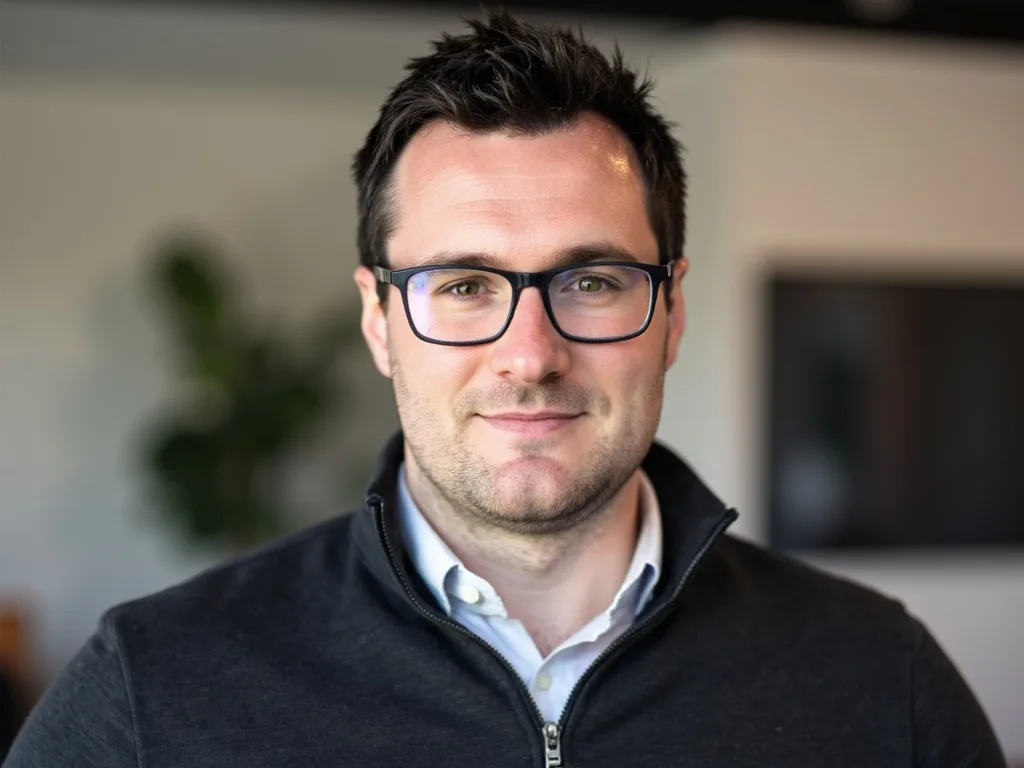
Jason Burns
Independent UK SEO, GEO and AI consultant. In search since 2007. Portfolio includes 3M, BlackRock, Unilever and E.ON. Owner of SEO Moves Ltd since 2014.
More about Jason →Want help picking the right engine for your research workflow?
Tell me what kind of research you do most. I tell you which engine should be your default and which to fall back to.
Get a recommendation